
I hear it often from hiring leaders in manufacturing. They post a job online and expect qualified people to apply. What shows up instead is a flood of resumes from people who barely match the role. It wastes time. It wastes money. It drains energy from people who already have a full day.
I have lived that same mistake. Years ago we posted roles online and in the trade magazines that used to drive this industry. AIMCAL. PFFC. Narrow Web and Label. Flexible Packaging Magazine. The ads generated activity. Activity is not talent.
The problem has only gotten louder. Application volume is up. Candidate quality is not. If you lead HR or operations in adhesives, tapes, converting, polymers, plastics, or flexible packaging, you already know the feeling. You open the inbox. You scan twenty names and you might find one person worth a conversation, if you are lucky.
The numbers behind the resume pile
This is not a gut feeling. The data now matches what hiring leaders in our space have been saying for years.
A 2026 FactoryFix survey of industrial recruiting and talent leaders found that 88 percent cite a shortage of qualified candidates as a top challenge. 65 percent say sourcing is their number one hiring bottleneck. 63 percent still plan to increase hiring this year. That combination is the squeeze. More openings. Fewer people who can actually do the work. More noise in every inbox.
The same research is blunt about where quality comes from. Social channels such as LinkedIn and Facebook were named by only 5 percent of those leaders as the source that produces the most qualified candidates. Job boards were used often. They were not the channel that delivered the people companies actually wanted to hire.
Look at applicant quality at the resume level. An analysis of more than 50,000 applicants from 2025 and 2026 found that 42.6 percent met less than 20 percent of the stated job requirements. Also, 66 percent met less than 40 percent. Only 4.66 percent met 80 percent or more of the hiring criteria. In sales and customer success roles, only 3.83 percent cleared that 80 percent bar. In skilled trades and technical roles the number dropped to 0.39 percent.
Read that again. In the technical work that sits next to converting and manufacturing, fewer than 1 in 200 applicants looked like a true match on paper.
Plenty of applications is not a pipeline. It is a screening tax (on time and resources) that your team pays every week.
Robert Half has reported that 42 percent of resumes received by HR managers come from people who do not meet the stated requirements of the role. Recruiters at Robert Walters have put the usable share even lower in tighter markets, with only 10 to 20 percent of applicants holding the skills the job actually needs. CareerBuilder found that 74 percent of employers admit they have hired the wrong person. The United States Department of Labor has long estimated that a bad hire costs at least 30 percent of first year earnings.
88% of industrial hiring leaders cite a shortage of qualified candidates
4.66% of applicants meet 80% or more of hiring criteria
$177,171 average cost of a bad B2B sales hire, per SalesFuel
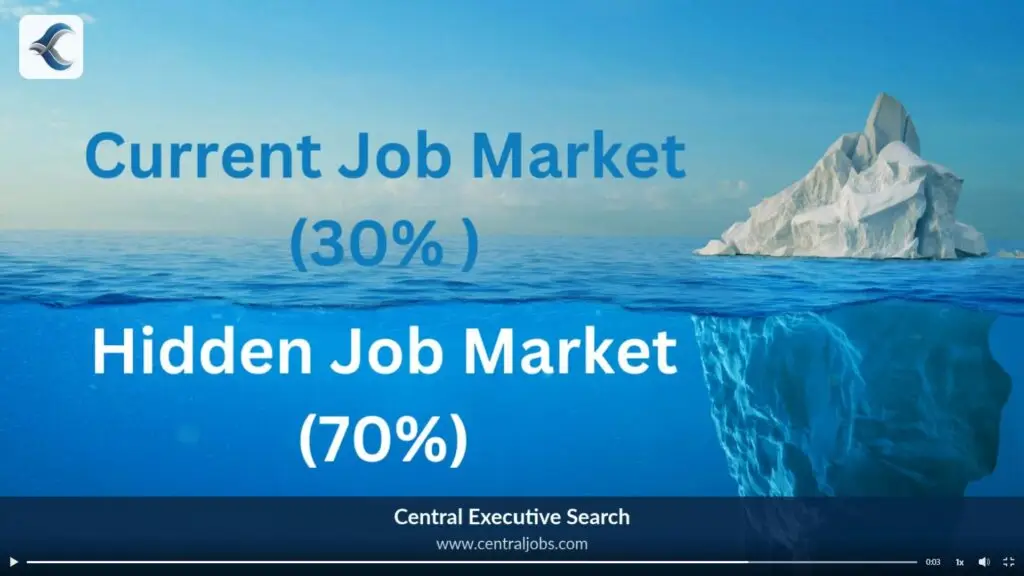
The people you want are already working
Manufacturing unemployment has been running near 3.1 percent, below the national rate near 4.1 percent. In plain language, about 97 out of every 100 workers who already have industrial skills are employed. They are not refreshing Indeed at lunch. They are running a territory, managing a plant, or calling on converters, other businesses, or end user customers.
That is why posting a specialized outside sales role and waiting feels so empty. The people who can sell specialty pressure sensitive tapes into flexographic printing, labels, and converter accounts already have a book of relationships. They are not unemployed. They are not hunting. They will take a call from someone they trust. They will not fill out a 12 field application for a posting that looks like every other posting. That’s honestly not a knock on your process. It’s just what the data is telling us.
The Bureau of Labor Statistics has pointed to hundreds of thousands of unfilled manufacturing jobs in the United States. Estimates have sat near 400,000 open roles. Plastics processing alone has been cited with roughly 49,000 openings and turnover near 36 percent, more than double typical manufacturing averages. The retirement wave is not a future problem. In several skilled trades, more than half the workforce is already 55 or older.
Meanwhile the markets those people serve keep growing. United States demand for converted flexible packaging reached about 25.3 billion dollars in 2024 and is forecast to rise near 2.9 percent a year.
The North American adhesive tape converter market was valued near 2.1 billion dollars in 2024.
United States flexible packaging adhesives have been estimated near 2.0 billion dollars, with mid single digit annual growth. Lamination adhesives across the Americas have been projected from about 2.85 billion dollars in 2025 toward 4.76 billion dollars by 2032.
Growth like that does not wait for a perfect applicant to appear in an inbox. It waits for a salesperson who already knows the converter, the pressroom, the adhesive chemistry, and the buying cycle.
What an open territory actually costs
SHRM puts average nonexecutive cost per hire near 5,475 dollars. That figure measures recruiting spend. It does not measure the empty chair.
Manufacturing roles have been taking longer to fill than the broader market. One 2026 analysis put manufacturing time to fill at 72.6 days against a 63.5 day average across industries. Industrial and manufacturing sales roles commonly run 45 to 75 days, and 90 to 120 days is not rare when the spec is tight. Executive and senior commercial searches often sit in a 60 to 120 day range. Separate research found that 89 percent of senior leadership roles are filled through search work, not through advertisements, because the people who can do those jobs are not browsing postings.
Then the clock keeps running after the offer. SalesFuel found that companies typically spend nearly three months hiring a sales representative before that person makes a first sales call, then another five and a half months before that person reaches peer level productivity. A bad B2B sales hire now averages 177,171 dollars when you add destroyed forecasts, weaker customer relationships, lost morale, and the drag on several departments. For a failed sales leader, some industrial advisors put the real damage at 18 to 24 months of stalled revenue growth.
If you lead a specialty tapes or converting division, that is not an HR metric. That is missed calls on converters, open spec work that never gets sampled, and a competitor sitting in accounts you meant to own.
A search that never went public
A vice president of Human Resources called me last year about three outside sales openings.
The company needed strong performers who could push specialty pressure sensitive tapes into flexographic printing, labels, and converter markets. Executives had already committed to growing that division with real urgency. They needed representatives in key territories who could start producing, not learning the industry from scratch.
She told me right away that she didn’t want to post on LinkedIn or the usual job boards. She said those channels never delivered the right candidates and only created more work for her team. I agreed with her completely.
We spent the intake call mapping what success actually looked like. Experience in adhesives or packaging sales. A proven record of opening new accounts. The drive to grow inside a competitive niche. We were not shopping for a generic outside salesperson. We were hunting for people who already spoke the language of adhesive coat weight, release liner specs, die cutting, and flexo press conditions.
I went to work through my network. No public paid ads. I did not waste time building a pile for her team to sort.
In 77 days we placed three top sales professionals, each covering a strategic region.
One of them closed a major new account in his first six months. That single win added more than 2 million dollars in sales. The results did not stay in one territory. That division grew from 17 million dollars in annual sales to 55 million dollars across the United States market over the next five years.
The right talent in the right spots made the difference. The posting never would have found those three people.
Why this industry punishes a public posting
Specialized converting and adhesive sales is a small world dressed up as a large market. A person can look strong on a resume and still be wrong for the territory. Selling commodity carton sealing tape is not the same as selling engineered bonding systems into medical, electronics, transportation, or high end graphics. Selling film to a brand owner is not the same as selling to a converter who lives on uptime and waste.
Public boards reward keywords. This work rewards pattern recognition. Who has already called on the exact customer set you need? Who has held quota in a long cycle industrial sale? Who will get in a car and walk a plant floor? Who has the credibility to sit with a technical manager and a purchasing manager in the same meeting?
Job boards cannot answer those questions. They produce volume. Volume forces your team to become full time screeners. Screening unpaid work is how good searches stall. FactoryFix found that after sourcing itself, hiring manager alignment and excess time spent on unqualified applicants were the next two sources of delay. More than half of the friction sat inside the process companies control.
There is a newer problem on top of the old one. Verification firms report that resume fabrication now accounts for 41 percent of detected hiring fraud, with AI assisted interview impersonation making up a large share of the rest.
I find that part deplorable. Scams can quickly ruin a candidate’s confidence in the hiring process.
When anyone can generate a polished application in minutes, the public posting becomes even less trustworthy. The filter has to live in relationships, references, and industry knowledge, not in an applicant tracking system.
What works instead
I have spent 25 years as an executive recruiter focused on converting, adhesives, packaging, and manufacturing. Central Executive Search has more than 40 years in this same set of industries. We run more than 100 searches a year. We work from a network of more than 65,000 contacts across more than 15 countries. Our fill rate sits at 87 percent. Our LinkedIn community is more than 100,000 members. Those numbers only matter because they describe a method.
The method is simple. Define the win before you talk to anyone. Then go to the people who already do this work.
- Write the outcome, not the wish list. Revenue, accounts, product mix, travel, and the buyer you need them to already know.
- Search among employed performers first. The best people in this industry are rarely posting that they are looking.
- Use people who live in the category every day. A generalist recruiter can find a salesperson. A specialist can find the salesperson who has already sold tape, film, adhesive, or converted product into the accounts you care about.
- Protect your team from the pile. If a search starts with 200 resumes, the process is already behind.
That is the work we did on those three territories. That is the work we do when a plant needs a process leader, when a converter needs a general manager, and when a specialty adhesives company needs a national accounts person who will not need a year of education before the first credible call.
If you are tired of the pile
If you lead HR or operations in adhesives, packaging, or converting, and you are tired of sifting through unqualified applicants, stop treating a public posting as a search strategy. Those postings do not work for specialized roles like these. They were built for volume hiring. Your roles are not volume hiring.
Reach out to me directly. I focus on this industry every day. I deliver the candidates who move the needle because I already know where they sit.
When you are ready to talk, we can map the territory, the product, and the kind of person who has already won in a market like yours. Then we go find that person. We do not wait for them to apply.
Angelo Giallombardo
President, Central Executive Search
linkedin.com/in/angelogiallombardo
Sources referenced in this article include FactoryFix 2026 State of Industrial Hiring, SoloPoint manufacturing hiring data, Lighthouse analysis of 50,885 applicants, Robert Half and Robert Walters applicant quality findings, CareerBuilder, the United States Department of Labor, SalesFuel research on the cost of a bad B2B sales hire, SHRM cost per hire benchmarking, Bureau of Labor Statistics manufacturing employment figures, Freedonia converted flexible packaging demand, and published adhesive tape and flexible packaging adhesive market estimates.